
An outdated website not only pushes customers away but also damages your reputation. According to a Google study, 53% of users abandon a page if it takes more than 3 seconds to load, and 75% judge a brand’s credibility by its website design (Source: Stanford). At Ikigai Marketing Digital, with more than 200 optimized websites for businesses in Spain and Latin America, we reveal why a website redesign in 2026 is essential to stay competitive.
1. Adapting to 2026’s Technological Trends
The digital landscape is evolving rapidly, and in 2026 elements such as integrated AI, AI-generated answers in search engines and Google’s mobile-first indexing are already the standard.
Ikigai example:
A tourism client increased bookings by 90% after implementing an AI-powered chatbot to answer questions in real time.
Key fact:
Google now shows AI-generated overviews above the search results. To be cited there, your website needs clear, well-structured content with original data. If it isn’t ready, you will lose traffic.
2. Improve User Experience (UX) and Reduce Bounce Rate
Web design isn’t just about aesthetics—it’s about functionality. A professional redesign focused on UX ensures:
- Optimal load speed (under 2 seconds)
- Intuitive navigation (no more than 3 clicks to find information)
- Responsive mobile design (60% of global traffic comes from mobile devices)
Real case:
A fashion store in Mexico reduced its bounce rate from 70% to 35% after simplifying its menu and adding smart search filters.
3. SEO Positioning: Core Web Vitals Will Be Non-Negotiable
Google uses Core Web Vitals (loading speed, visual stability and responsiveness) as a ranking signal. A website redesign allows you to:
- Fix code errors affecting performance
- Implement schema markup to stand out in search results
- Optimize images and scripts to improve Largest Contentful Paint (LCP)
Key tools:
PageSpeed Insights (technical diagnostics)
Screaming Frog (SEO audit)
4. Boost Conversions with Customer-Centered Design
A strategic redesign can transform visitors into paying customers. Key elements for 2026 include:
- Personalized landing pages based on Buyer Persona profiles
- Dynamic CTAs (e.g., “Book now and get 20% off!”)
- Trust signals (security badges, video testimonials)
Proven result:
A Spanish fintech increased leads by 150% after redesigning its contact form, reducing fields from 10 to 4.
5. Prepare for New Web Accessibility Requirements
Accessibility requirements keep getting stricter: the current standard is WCAG 2.2 and, since June 2025, the European Accessibility Act requires compliance from businesses selling in the European Union. A redesign guarantees:
- Compatibility with screen readers for visually impaired users
- High-contrast color palettes
- Keyboard-friendly navigation
Additional benefit:
Google prioritizes accessible websites in rankings.
Common Mistakes a Professional Web Redesign Avoids
- Generic designs: Templates that fail to represent your brand identity
- Lack of SEO strategy: Migrating a site without 301 redirects results in traffic loss (we explain how to avoid it below)
- Ignoring analytics: Not relying on behavioral data (e.g., heatmaps)
How to Start a Successful Website Redesign in 2026
At Ikigai Marketing Digital, we follow this process:
- Technical and content audit (identify opportunities)
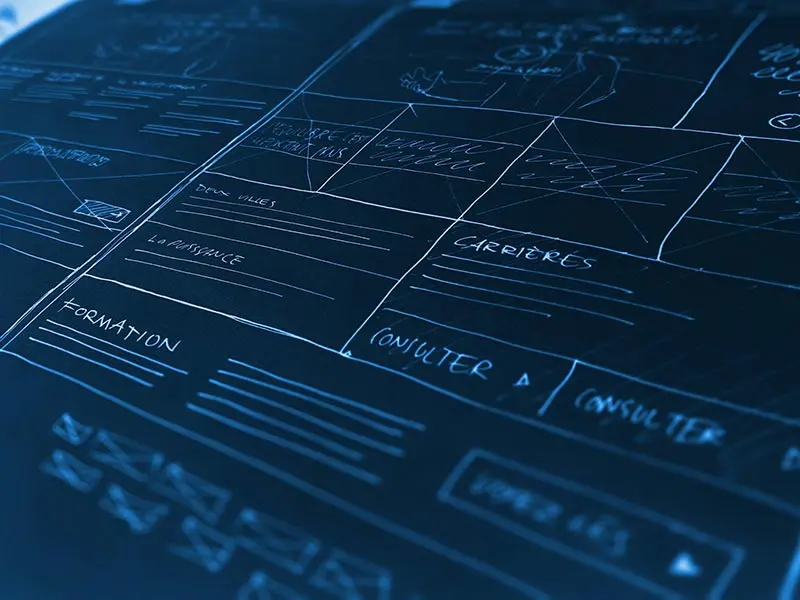
- Conversion-focused design (prototypes in Figma/Adobe XD)
- Error-free migration (preserving SEO and user experience)
- A/B testing to optimize each element
Signs your website needs a redesign
You don’t have to wait until your site “breaks”. These signs tell you it’s time:
- It takes more than 3 seconds to load on mobile. Measure it for free with PageSpeed Insights.
- It doesn’t display well on small screens, or users have to zoom in to read and tap buttons.
- Inquiries have dropped while traffic stays the same: the site attracts visitors but doesn’t convert them.
- You can’t update it yourself: every text or price change depends on a developer.
- The design no longer represents your brand or looks dated next to your competitors.
- It lacks HTTPS, working forms or a clear way to reach you, such as a WhatsApp button.
If two or more apply to you, a redesign will probably pay for itself. In how to design a website that turns visitors into customers you’ll find the principles we apply to every project.
How much a redesign costs and how long it takes
There is no single price, because it depends on scope. These are the factors that drive budget and timelines the most:
- Number of pages and templates: a corporate site with five to ten sections is not the same as a catalog or an online store.
- Content: whether copy and photos already exist or need to be produced.
- Features: forms, bookings, payments, private areas or CRM integrations.
- Migration: how many URLs need redirecting and how much content needs moving.
As a reference, a corporate website usually takes 4 to 8 weeks from audit to launch, and an online store or a project with integrations 8 to 12 weeks or more. If you sell online, our guide to choosing the right eCommerce platform may also help.
How to redesign without losing SEO (301 redirects and migration)
The biggest risk of a redesign is losing the rankings your site has already earned. To avoid it:
- Build a URL inventory before touching anything: every page that receives visits or external links (Search Console and Analytics will show you).
- Keep the URLs that work whenever you can. If one changes, create a 301 redirect from the old address to the new one.
- Preserve titles, descriptions and copy on your best-ranking pages, or improve them without losing their keywords.
- Work in a staging environment and block it from indexing until launch.
- After going live, submit the new sitemap to Search Console and monitor 404 errors and traffic over the following weeks.
Frequently asked questions
How often should a website be redesigned?
As a rule of thumb, every three to five years, or sooner if your business model changes or the signs above appear. Between redesigns, continuous improvements are the way to go.
Will a redesign make me lose Google rankings?
It can happen if URLs change without redirects or if content that ranked well is removed. With a planned migration, traffic is usually maintained and improves in the following months.
Can I redesign in stages?
Yes. It often makes sense to start with the pages that convert best (home, services and contact) and move on to the rest in phases.
Conclusion
Digital challenges are more complex in 2026, and your website is the core of your strategy. A professional redesign is not an expense—it’s an investment to attract more clients, improve ranking, and future-proof your business.
Want to evaluate if your website is ready for 2026? Schedule a consultation with our team or explore our web design services.